
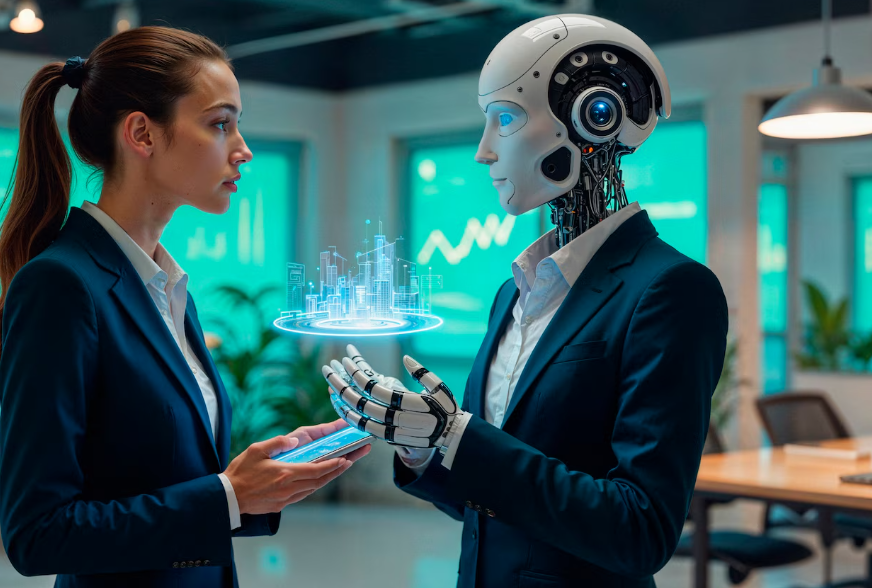
In the dynamic landscape of data science, automated machine learning, AutoML in short, has emerged as a powerful approach to accelerate model development. However, as automation scales, one critical challenge surfaces: the lack of contextual intelligence. Automated models often struggle to understand the domain-specific nuances required to make accurate predictions or recommendations.
To overcome this, organisations are increasingly adopting domain expertise augmentation — a strategy that combines contextual human intelligence with automated modelling pipelines. This synergy ensures better interpretability, reliability, and decision-making power, especially in high-stakes industries like finance, healthcare, retail, and manufacturing.
For professionals enrolled in a data science course in Chennai, mastering this intersection of automation and human expertise is vital for building robust, business-ready AI solutions.
Understanding Domain Expertise Augmentation
Domain expertise augmentation is the process of embedding human knowledge into automated pipelines to:
- Improve feature engineering with domain-relevant variables
- Guide model selection based on business context
- Reduce false positives and false negatives.
- Ensure regulatory and ethical compliance.
While AutoML handles the technical complexity, domain experts bring interpretative clarity, ensuring models stay aligned with real-world business goals.
Why Contextual Intelligence Matters
Automated models are powerful but context-blind. For example:
- A healthcare AutoML model may identify unusual patterns in MRI scans, but fails to factor in clinical correlations unless guided by medical experts.
- An e-commerce recommender system might optimise for clicks but unintentionally undermine profitability without insights from merchandising teams.
Domain intelligence fills these gaps by shaping better assumptions, defining constraints, and curating features that automated systems cannot identify on their own.
Key Challenges in Merging Automation with Expertise
1. Knowledge Capture
Capturing tacit knowledge from domain specialists is often difficult because:
- Experts rely on intuition developed over the years
- Context is often unstructured and non-documented
Solution: Use knowledge graphs and semantic embeddings to convert human expertise into machine-readable insights.
2. Model Interpretability Gaps
AutoML often outputs black-box models, which domain experts cannot validate effectively.
Solution: Integrate explainability frameworks such as SHAP or LIME to provide intuitive insights into how the model makes predictions.
3. Conflicting Priorities
Data scientists often prioritise accuracy metrics, while domain experts focus on business outcomes.
Solution: Co-create evaluation metrics that balance technical precision with strategic objectives.
Applications Across Industries
Healthcare
- Combining physician knowledge with AutoML to predict patient deterioration risks
- Automating anomaly detection in diagnostics while enabling human validation loops
Finance
- Integrating auditor expertise into fraud detection pipelines
- Embedding contextual features like seasonal cash flow trends for more accurate credit scoring
Retail and E-Commerce
- Leveraging merchandising knowledge to improve demand forecasting models
- Balancing revenue optimisation with customer experience metrics
Manufacturing
- Fusing machine sensor data with process engineering expertise
- Reducing downtime using predictive maintenance enhanced by operator-driven insights
Designing AI Pipelines for Domain Expertise Augmentation
1. Human-in-the-Loop Architecture
Enable continuous collaboration between AI systems and domain experts during:
- Feature engineering
- Model validation
- Edge-case detection
2. Knowledge Graph Integration
Use ontology-driven models to encode relationships between business concepts and map them to data features.
3. Custom Model Constraints
Allow domain experts to define:
- Thresholds for critical KPIs
- Acceptable error tolerances
- Ethical and compliance boundaries
The Future of Contextualised Automation
By 2026, we’ll see a shift from model-centric AI to context-centric AI:
- AutoML platforms will integrate dynamic knowledge bases for real-time decision-making
- Generative AI will convert unstructured expert insights into structured training data.
- Cross-domain learning systems will enhance adaptability across business contexts.
For learners enrolled in a data science course in Chennai, this evolution opens opportunities to build next-generation hybrid pipelines that seamlessly merge automation with human insight.
Best Practices for Professionals
- Learn Domain-Specific Tools
- Healthcare: FHIR APIs, clinical coding
- Finance: Basel III risk metrics, KYC processes
- Retail: SKU-level demand modelling
- Focus on Explainable AI
Understanding model rationale builds trust among stakeholders. - Adopt Continuous Learning Pipelines
Keep updating models with expert-reviewed feedback loops. - Collaborate Closely with Stakeholders
Co-create AI solutions with business teams for goal alignment.
Conclusion
The future of AI lies in synergising automation with human expertise. While AutoML accelerates workflows, contextual intelligence ensures that decisions are relevant, interpretable, and aligned with business objectives.
Professionals completing a data science course in Chennai should focus on acquiring not just technical proficiency but also the ability to work in tandem with domain experts. This combined skill set will position them as strategic AI leaders, capable of driving value through intelligent, context-aware automation.