
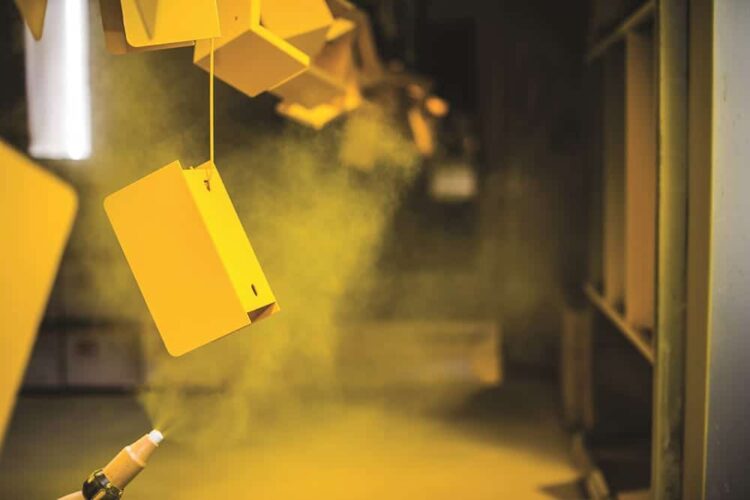
Finishing results in powder coating are only as good as the temperature control inside the oven. Behind the smooth, even coatings on metal parts lies a balance between heat consistency and timing that determines how strong, glossy, and durable each layer becomes. For anyone running professional powder coating equipment, understanding how temperature influences results can make the difference between flawless finishes and wasted production time.
Ensuring Uniform Film Build Through Stable Chamber Temperatures
A consistent chamber temperature is vital for creating an even film build. Powder particles must melt and flow simultaneously across every part surface to form a uniform layer. If a propane powder coating oven has hot or cold spots, areas of the part may receive different heat levels, leading to irregular film thickness and surface defects. Maintaining steady temperatures ensures the coating adheres and cures evenly from edge to edge.
Uniform heating also supports color consistency across batches. With stable thermal conditions, each piece cured in the same cycle achieves identical finish properties, which is essential for manufacturers who rely on repeatable results. This reliability reduces inspection failures and rework, keeping production lines efficient.
Preventing Coating Brittleness by Monitoring Accurate Bake-ramp Rates
The rate at which parts reach their curing temperature determines the flexibility and durability of the final finish. If the bake-ramp is too aggressive, coatings can become brittle, resulting in cracks during handling or use. A properly calibrated propane powder coating oven gradually increases heat to allow controlled powder flow and film formation.
By managing the rise in temperature, operators preserve the chemical structure of the coating and improve long-term adhesion. This balance helps prevent surface tension from creating weak points while ensuring the finish retains its strength through repeated thermal cycles.
Avoiding Surface Discoloration Caused by Uneven Heat Exposure
Inconsistent airflow or burner output can create uneven heat exposure, leading to color shifts or gloss variations on coated parts. Dark spots or yellowing are often signs that sections of the oven are hotter than others. A well-tuned temperature control system distributes heat evenly so that pigments and resins cure correctly, maintaining visual uniformity across the entire batch.
Proper circulation also limits thermal stress on sensitive substrates. Even small temperature fluctuations can distort finishes on aluminum or thin steel parts, making them appear inconsistent under light. Advanced control systems in modern powder coating equipment reduce these risks by stabilizing oven conditions in real time.
Achieving Full Cross-linking by Maintaining Required Dwell Times at Target Temperature
Reaching and holding the target temperature long enough to achieve complete cross-linking is what separates professional-grade finishes from weak coatings. Cross-linking is the chemical bonding process that gives powder coatings their hardness, chemical resistance, and durability. If parts don’t remain at the correct temperature for the required dwell time, the coating remains under-cured and vulnerable to scratching or peeling.
An accurately controlled propane powder coating oven ensures each part spends enough time within the correct temperature window. Automated feedback loops verify that all zones stay within tolerance so the chemical reactions within the powder can complete fully. The result is a stronger, more resilient finish that meets demanding industry standards.
Minimizing Rework and Scrap by Verifying Part‐Specific Thermal Mass Compensation
Different parts absorb heat at different rates depending on size, thickness, and material. Heavier components take longer to reach curing temperature, while lightweight pieces heat up faster. Without accounting for this, operators risk under-curing thicker items or over-baking smaller ones in the same batch.
Modern ovens use temperature profiling to adjust for these differences automatically. By tracking part-specific thermal mass, systems ensure every component receives the correct heat exposure. This level of precision cuts down on rework and wasted material, improving yield rates and reducing costs associated with production errors.
Controlling Gloss and Texture by Adhering to Substrate Temperature Profiles
Gloss and texture aren’t determined by powder chemistry alone—substrate temperature plays a major role. If the base metal heats unevenly, it can alter how the powder melts and levels, changing the intended surface finish. Operators maintain specific substrate temperature profiles to preserve the look and feel specified by the coating design.
Whether the goal is a smooth gloss or a fine-textured matte finish, maintaining correct thermal profiles ensures visual and tactile consistency. The ability to replicate these results across different production runs separates precision-controlled powder coating equipment from basic systems.
Reducing Energy Consumption Through Optimized Time/Temperature Windows
Efficient energy use depends on how well the oven’s heating cycles are managed. Overheating wastes propane and increases wear on components, while underheating extends cycle times. Optimizing the relationship between temperature and dwell duration allows operators to minimize energy use without sacrificing finish quality.
Advanced control software adjusts the burner output and fan speed to achieve target conditions quickly, then maintains them with minimal fluctuation. These optimizations reduce operating costs and lower emissions while maintaining consistent coating performance throughout the production shift.
Safeguarding Chemical and Corrosion Resistance via Precise Curing Conditions
The curing process determines more than just appearance—it defines how well the coating will protect against chemicals, moisture, and corrosion. If temperatures fluctuate or curing is incomplete, the film becomes porous, allowing contaminants to penetrate over time. Consistent heating ensures that the coating fully bonds with the substrate, creating a dense, sealed barrier.
This precision is especially important in industries like automotive, aerospace, and heavy equipment, where coatings are expected to endure harsh conditions. Proper temperature control ensures the coating’s protective qualities remain intact throughout the product’s lifespan.
Increasing Throughput Reliability by Integrating Heater Feedback and Logging Systems
To maintain consistent results in large-scale operations, continuous monitoring of temperature and performance data is essential. Integrated feedback systems within modern propane powder coating ovens track burner activity, chamber temperature, and airflow in real time. These systems automatically adjust settings to keep curing conditions stable across shifts. Data logging provides traceability and helps identify process inefficiencies or equipment issues before they affect product quality. With reliable temperature feedback and automated control, production throughput increases while maintaining consistent finish quality.